
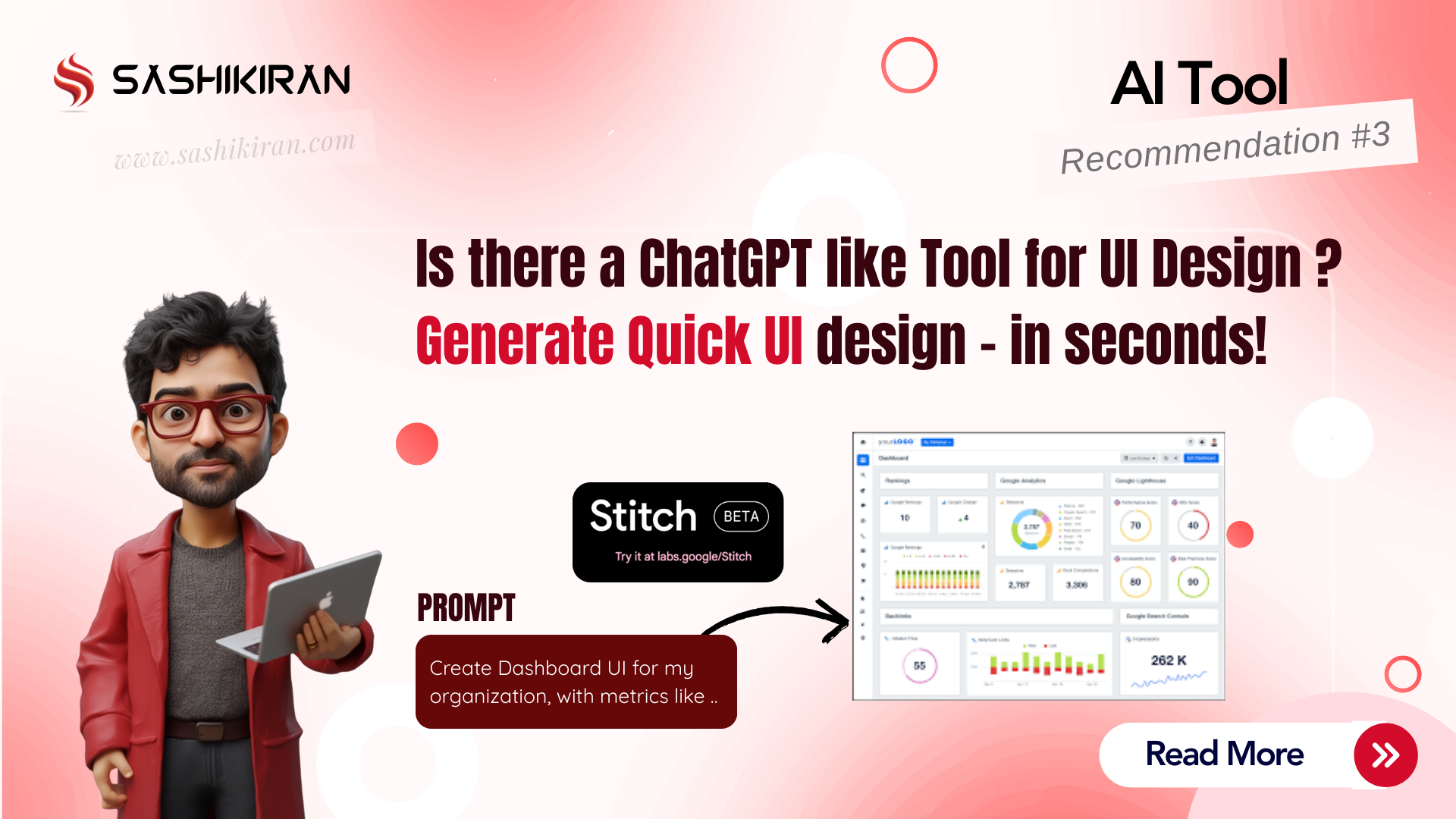
Google Stitch: The AI-Powered Future of Interface Design
Introduction
Imagine typing a few lines of text and watching an entire interface come to life—auto-generated, beautifully designed, and ready to prototype. Sounds futuristic? With the launch of Google Stitch, this is now a reality.
Google’s experimental AI tool, Stitch, might just be the ChatGPT moment for UI/UX Design, bringing speed, creativity, and accessibility into the core of interface design.
What Is Google Stitch?
Google Stitch is an experimental project by Google Labs that turns natural language prompts into interface layouts—instantly.
It leverages generative AI to build UI components and full interface screens based on how users describe their needs. From wireframes to styled layouts, Stitch helps bring interface ideas to life without needing traditional design tools.
You simply say what you want, and Stitch starts designing.
Why Stitch Matters for Designers and Product Teams
Here’s how Google Stitch could impact your workflow as a:
UX Designer
- Jumpstart design ideas faster
- Generate layout variations quickly
- Explore new concepts with less friction
UI Designer
- Create consistent, modular UI components
- Speed up wireframing and low-fidelity prototypes
- Align design systems faster using text-based logic
Startup Founder / Product Manager
- No need to rely on full-time designers for early MVPs
- Communicate design intent using natural language
- Validate product flows before investing in high-fidelity
Real-World Use Cases
1. Rapid Prototyping
Stitch helps teams mock up user flows in minutes—ideal for hackathons, MVP pitches, or stakeholder presentations.
2. Design Collaboration
Product managers or developers can now generate UI drafts and share with designers for refinement—improving cross-functional workflows.
3. Onboarding Non-Designers
Entrepreneurs, marketers, or even interns can participate in product design, breaking down the skill barrier.
Is Google Stitch Competing with Figma?
While Figma remains the industry standard for collaborative design, Stitch’s potential lies in its AI-first approach.
Imagine integrating Stitch with tools like Figma or Framer in the future:
- Generate UI in Stitch
- Refine and animate in Figma
- Build real apps in no-code tools
Google is building a bridge between ideation and interface. Stitch doesn’t replace designers—it empowers them.
Limitations to Consider
As of now, Stitch is still in experimental mode:
- Limited customization
- Visual styling may require refinement
- Currently text-based; no drag-and-drop UI yet
But like most AI tools, it’s evolving fast. And early adopters will shape its future.
Final Thoughts
As a UX Design Mentor, I believe tools like Google Stitch signal a shift in how we think about creativity. It’s not about machines replacing humans it’s about humans thinking faster, experimenting deeper, and collaborating smarter.
Designers who embrace AI will elevate their role from creators to strategists.
If you’re just starting your UX journey or already leading product teams—learn the tools, test the boundaries, and prepare for the new era of AI-enhanced design.
Want to Try Stitch?
Follow for More
For more updates on AI tools for product design, UX strategy, and digital transformation:
- 🔔 Follow me on LinkedIn – Sashikiran’s Profile
- 📚 Explore my book – 7S Design Framework
- 📲 Join my WhatsApp Channel – For weekly design + AI insights