Why Tamil Nadu Political Parties Use Red 🔴in Their Flags — A Lesson in Ethnography, Color Psychology, and Design Strategy
Introduction: Why Do Tamil Nadu Political Parties Use Red?
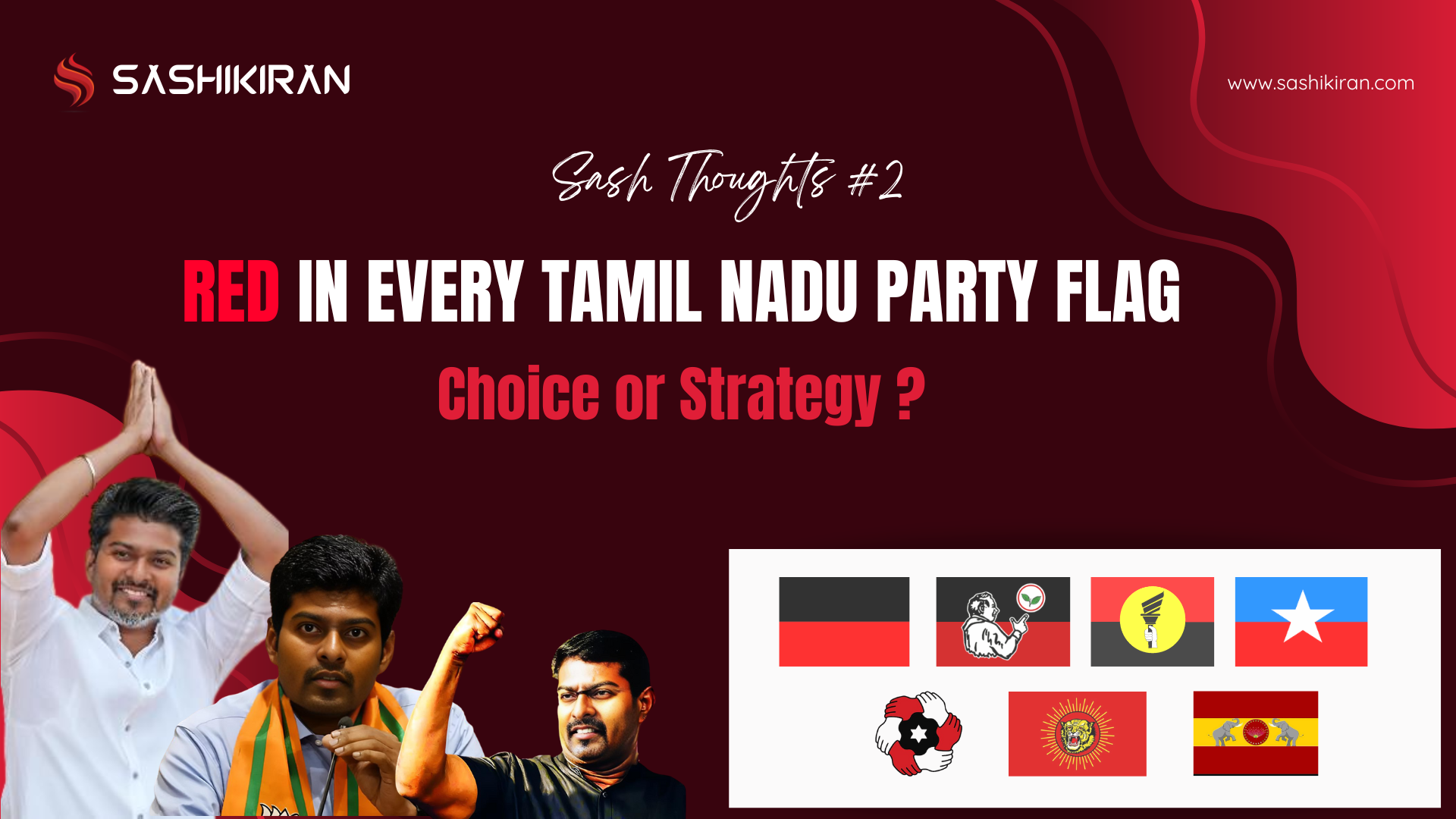
If you’ve ever noticed the flags of major political parties in Tamil Nadu—like ADMK, DMK, TVK, NTK , PMK, DMDK, or MDMK—you’ll see a recurring theme: the color red.
But is this just a visual design choice?
Absolutely not.
In this article, we explore:
- The role of ethnography in color selection
- How political parties use color for social engineering
- Lessons for UI/UX designers and product managers
- The connection with the 7S Design Framework
Let’s dive in.
🔴 The Color Red in Tamil Nadu: More Than Just Aesthetics
Red is not just a bold color — it’s emotionally and historically charged in Tamil Nadu.
Here’s what red represents in this cultural context:
- 🔥 Resistance: Rooted in the Dravidian movement, red symbolizes rebellion against casteism and oppression.
- 🩸 Sacrifice: Reminiscent of freedom fighters and revolutionary ideologies.
- ❤️ Emotion: Tamil Nadu’s cinematic and political cultures are passionate, and red matches this intensity.
From temple rituals (kumkum) to political stage design, red is deeply woven into the visual culture of Tamil life.
Ethnography: The Missing Link in Color Strategy
Most design and branding teams rely on global color psychology. But they often miss the local lens: ethnography.
What is ethnographic research?
Ethnography involves immersing in and understanding a community’s social behavior, traditions, symbols, and emotional triggers.
When selecting a color for your brand or product in Tamil Nadu:
- Ask what symbols and rituals dominate public spaces.
- Investigate how colors are used in festivals, protests, and politics.
- Understand what visuals mean to different communities.
In Tamil Nadu, red is a visual symbol of identity, not just a design choice.
Political Parties = Social Engineers
Political parties in Tamil Nadu do more than win votes. They engineer cultural mindsets.
Here’s how they use design (especially color):
- Normalize powerful visual identities (e.g., ADMK / DMK’s red and black combo).
- Use flags, logos, and stage design to reinforce emotional symbols.
- Shape the public’s memory and associations with certain colors.
Red is used strategically — in rallies, party materials, clothing, vehicles — to embed the party’s message in everyday life.
That’s not branding. That’s systemic influence.
Lessons for UI/UX Designers and Product Managers
If you’re building a product for a culturally rich region like Tamil Nadu, you need more than UI trends. You need ethnographic UX strategy.
- Symbolism: Design elements should resonate with your user’s subconscious beliefs.
- Social Context: Products should reflect and respect the social environment of your audience.
Political parties in Tamil Nadu excel at both.
They understand symbols (red = power + rebellion)
They adapt to the social ecosystem (caste, cinema, culture)
Ask yourself:
- Are your colors and visuals aligned with local sentiment?
- Are you evoking the right emotional triggers in your product UI?
- Are you aware of symbolic meanings in your user’s region?
Ignoring this means alienating your audience — even if your UX is technically “good.”
Conclusion
The dominance of red in Tamil Nadu’s political party flags is a brilliant case of ethnographic branding. It’s not about looking good. It’s about belonging, influencing, and mobilizing.
If you’re a designer, marketer, or founder — let this be your takeaway:
🎯 “Don’t just design for your users. Design with their cultural memory in mind.”
🚀 For more AI tools, design strategies, and UX insights,
👉 Follow Sashikiran on LinkedIn or join the WhatsApp Channel
📘 Want to go deeper into designing culturally-aware products?
Read Sashikiran’s book — 7S Design Framework.